
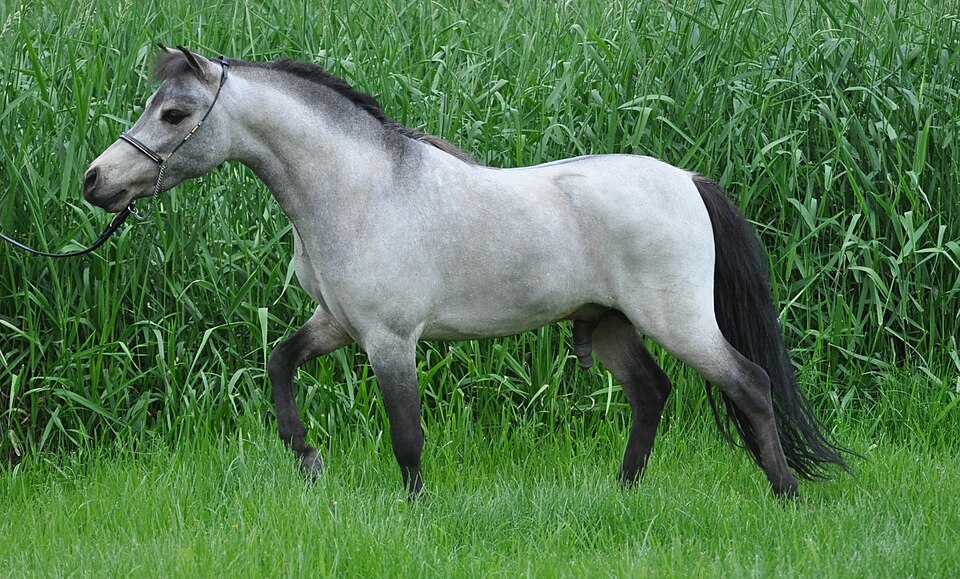
Miniature Américain : guide complet de la race
A miniature horse is a type of horse characterised by its small size. Usually it has been bred to display in miniature the physical characteristics of a full-sized horse, but to be little over 100 cm (40 in) in height, or even less. Although such horses have the appearance of small horses, they are genetically much more similar to pony breeds, such as the Shetland. They have various colors and coat patterns.
Fiche récapitulative
| Caractéristique | Détails |
|---|---|
| Nom | Miniature Américain |
| Pays d’origine | États-Unis |
| Taille au garrot | 60-86 cm |
| Poids | 30-70 kg |
| Robes | Toutes |
| Espérance de vie | 25-35 ans |
| Caractère | Doux, affectueux, sociable, joueur, intelligent |
Histoire et origines
Miniature horses originated in Europe, where there is written and iconographic documentation of them from the late eighteenth century. In the first half of the twentieth century small horses were bred in England by Lady Estella Mary Hope and her sister Lady Dorothea.
The Falabella was developed in Argentina in the mid-1800s by Patrick Newtall. When Newtall died, the herd and breeding methods were passed to his son-in-law, Juan Falabella.
Morphologie et caractéristiques physiques
Le Miniature Américain mesure entre 60-86 cm au garrot pour un poids de 30-70 kg. Les robes admises sont : toutes.
Miniature horses are generally quite hardy. They often live for longer than is typical for full-sized horses of some breeds; the usual life span is from 25 to 35 years.
Their predisposition to disease is markedly different from that of full-sized horses.
Caractère et tempérament
Le Miniature Américain est décrit comme doux, affectueux, sociable, joueur, intelligent. Ces traits de caractère en font un poney apprécié pour de nombreuses activités équestres.
Aptitudes et disciplines
Le Miniature Américain excelle dans les disciplines suivantes : compagnie, attelage miniature, guidage de personnes aveugles, thérapie, spectacle.
Miniature horses are commonly kept as companion animals. They are often too small for any but the smallest riders to ride, but are suitable for driving. Some may participate in other horse show events. A small number have been trained as guide horses for blind people, particularly for those who consider dogs unclean, as is common in Muslim cultures.
Alimentation
Petites quantités de foin de qualité. Attention extrême à l’obésité. Pas de céréales.
Santé et entretien
Sujet aux problèmes dentaires, reproductifs, nanisme, difformités. Suivi vétérinaire régulier.
Comme pour tous les poneys, un suivi vétérinaire régulier est essentiel : vaccinations, vermifugation, soins dentaires et parage des pieds.
Le Miniature Américain, pour qui ?
Animal de compagnie et d’attelage miniature. Ne peut pas être monté. Utilisé comme chien-guide pour aveugles aux USA.